Automation you can account for.
Oryvin connects your policies, plans, systems and evidence into one controlled platform, so that doing the work and proving the work are the same activity.
Most organizations run their policies, their tools and their proof in three different places.
Policies live in documents. Automation lives in scripts and consoles. Evidence ends up in screenshots and memory. Over time the three drift apart, and every audit becomes a hunt.
Oryvin keeps them connected: the policy says what must happen, the plan says how, the platform does it, and the record proves it.
Four things leadership cares about
Oryvin is organized around outcomes, not tools.
Compliance as a by-product
Work is planned against your controls and recorded as it happens, so evidence exists before anyone asks for it.
Sensitive data stays protected
An obfuscation engine gives teams realistic, consistent test data without exposing the real thing.
AI in the right place
Public and private AI gateways route every request by the sensitivity of its content, not by habit.
Control without friction
Every automated step runs from an approved plan, under policy, with a person able to see and stop it.
One system, six capabilities
Each capability stands on its own and is stronger together.
HIPAA and HITRUST alignment
Every control is turned into role-based work with evidence captured as it is produced.
See howObfuscation engine
Real data goes in behind the boundary. Consistent, de-identified data comes out.
See howPublic and private AI gateways
Two lanes for AI work, with sensitive content kept on infrastructure you own.
See howOrchestration
Approved plans are executed, scheduled and followed step by step in Helm.
See howGoverned documents
Policies and procedures with versions, approvals, review schedules and offline viewing.
See howSecure foundation
Single sign-on, multi-factor access, internal certificates and internal-only services.
See howFrom policy to proof
Every piece of work follows the same controlled path.
Control
A policy or request defines what must be done and what evidence is needed.
Plan
The work is written as a plan: clear steps, owners and checks.
Approve
People review and approve the plan before anything runs.
Execute
Orchestrator carries out each step under policy, with rollback.
Prove
Helm records every step, so the evidence is already there.
Use AI everywhere it helps, and keep sensitive data where it belongs.
Oryvin runs open-weight language models on your own infrastructure behind two gateways. Ordinary work uses the general lane. Anything that contains, or might contain, protected information stays in the private lane, on hardware you control.
- Routing by data sensitivity, not by project or team
- Private lane isolated on its own host
- Standard, OpenAI-compatible interface for existing tools
Everyday work
Assistants, coding help, knowledge search and media tools for non-sensitive content.
Protected content
An isolated host with no outside access, for anything that may contain protected information.
The plan format that people and automation both understand.
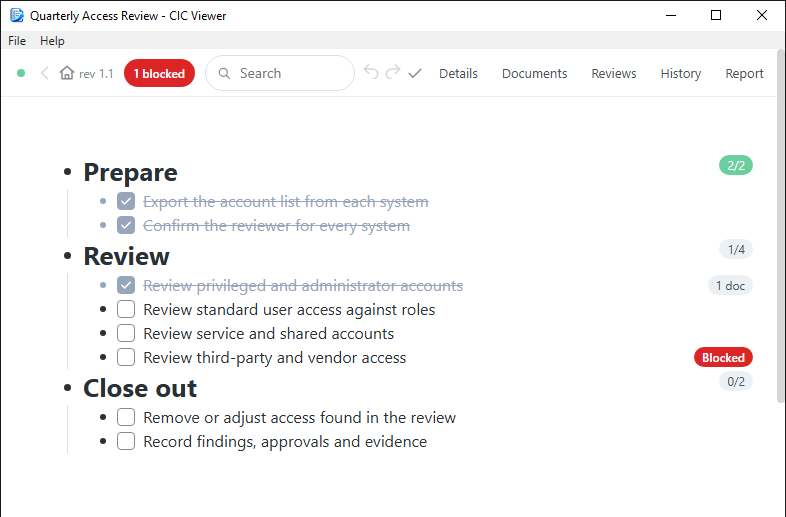
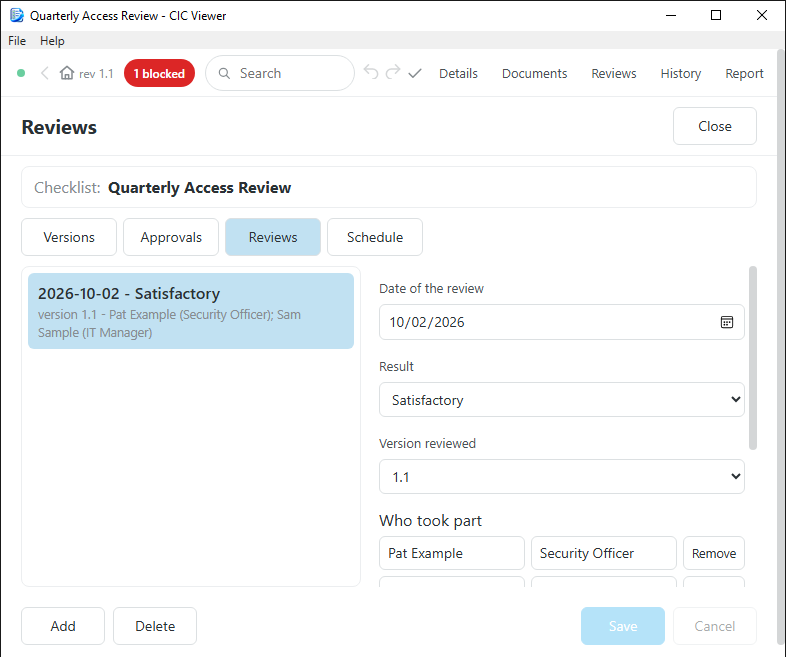
A CIC (Checklist In-Charge) file is a single plan: tasks with states, supporting documents, versions, approvals, a log of reviews with their results and participants, and a complete history of every change.
Built for Orchestrator
The plan format Orchestrator executes, and built to be followed in Helm.
For people and automation
Viewers for people, plus a command line for automation.
One portable file
Easy to review, hand over and archive.
See Oryvin for yourself
Ask us for the viewers and a look at a real plan, or for a briefing tailored to your environment.
Get the viewers Request a briefing